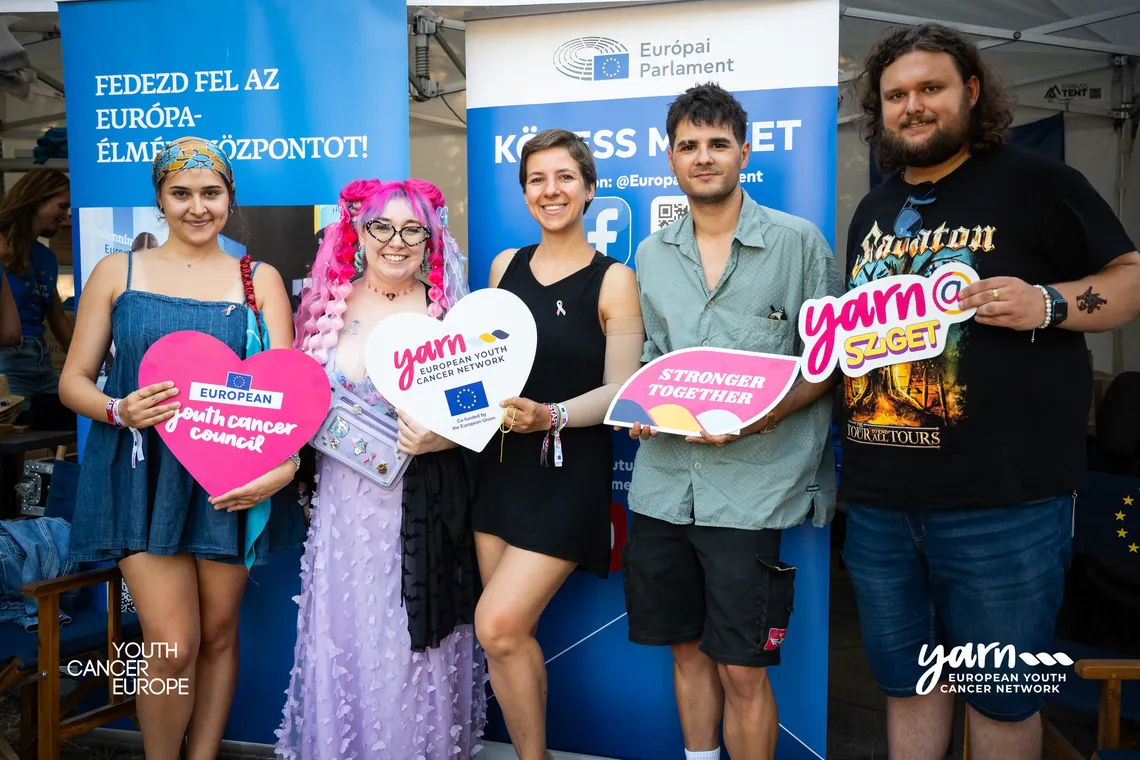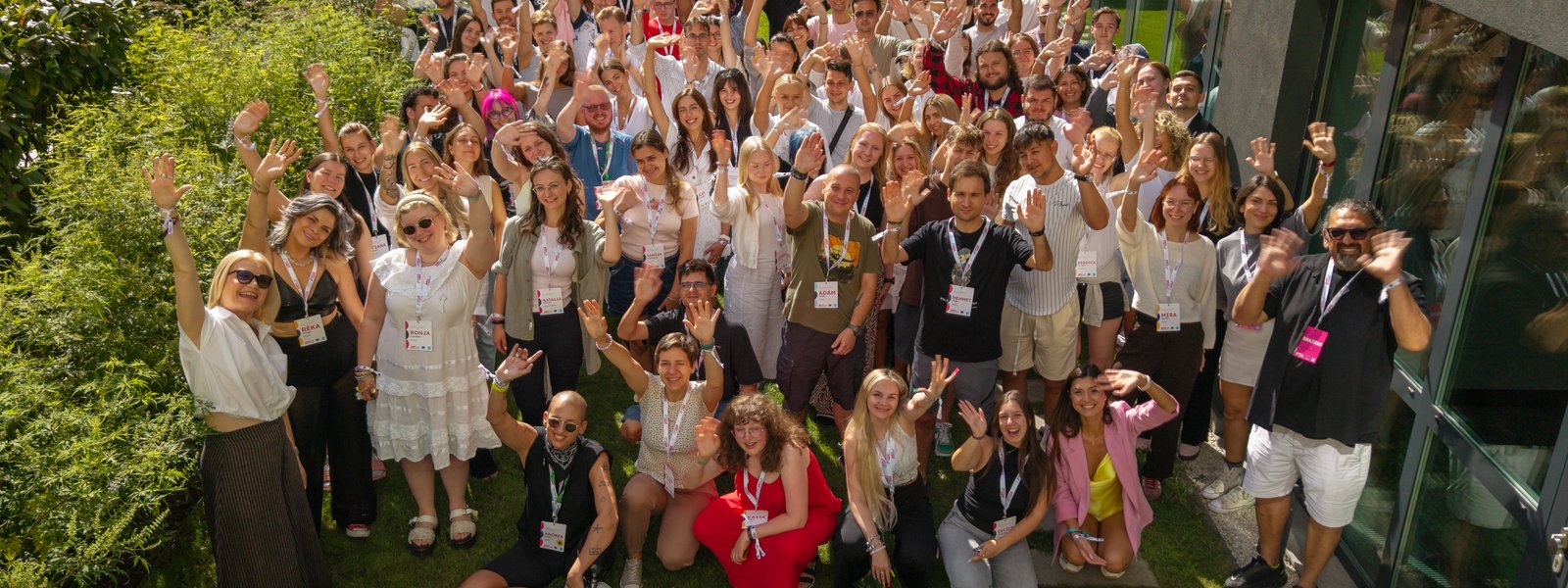
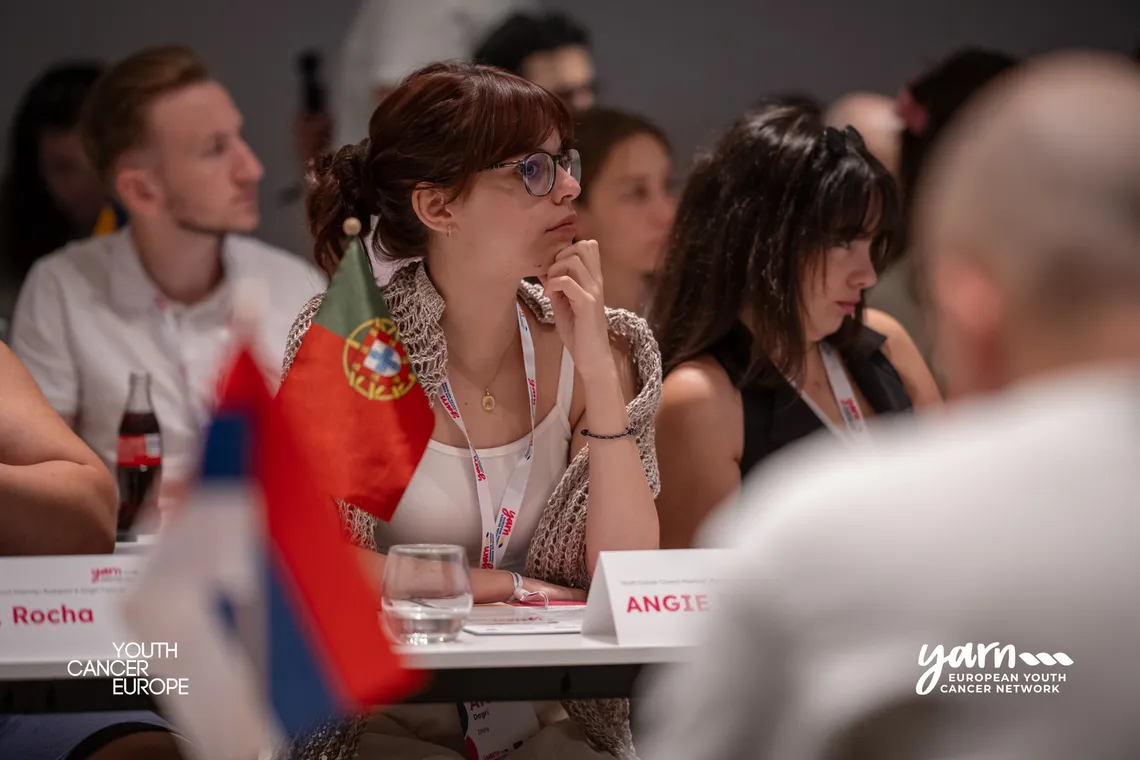
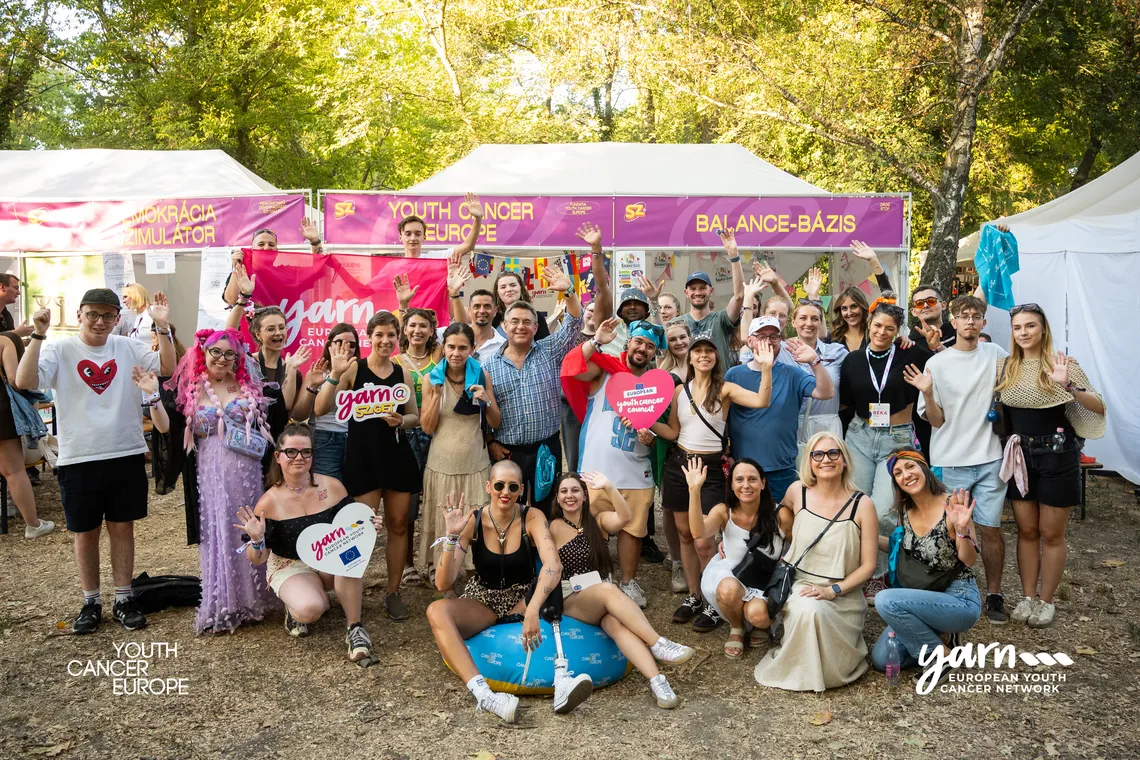
This summer, 100 young people from 30 countries gathered in Budapest as part of the European Youth Cancer Network (YARN), coordinated by Youth Cancer Europe.
Over the course of one week, they strengthened Europe’s first Youth Cancer Council, engaged thousands of people at Sziget Festival, met international artists backstage, spoke directly with policymakers and helped identify a new European policy initiative that Youth Cancer Europe is now taking forward.
100 people. 30 countries. 26 languages.
Behind every statistic is a different experience, a different healthcare system and a different story.
Bringing together young people from across Europe creates something that cannot happen online or within a single country: space to challenge ideas, learn from one another and shape solutions that reflect the realities of young people affected by cancer across Europe.
A new chapter for patient leadership
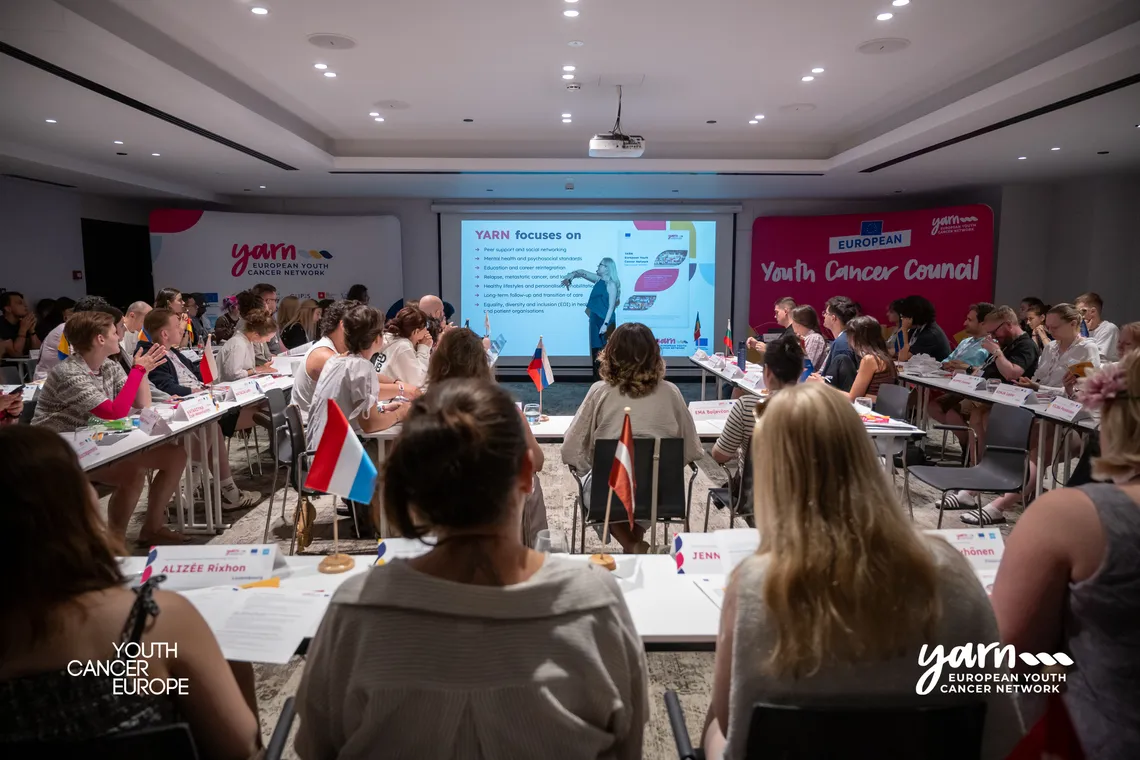
One of the week’s biggest milestones was the formal adoption of the governance framework for the Youth Cancer Council.
Designed by young people with lived experience of cancer, it establishes how the Council will make decisions, represent its members and contribute to the work of the European Youth Cancer Network in the years ahead.
It is an important step towards embedding lived experience within the governance of a European collaboration, not simply through consultation, but through shared decision-making.
Taking the conversation beyond the cancer community
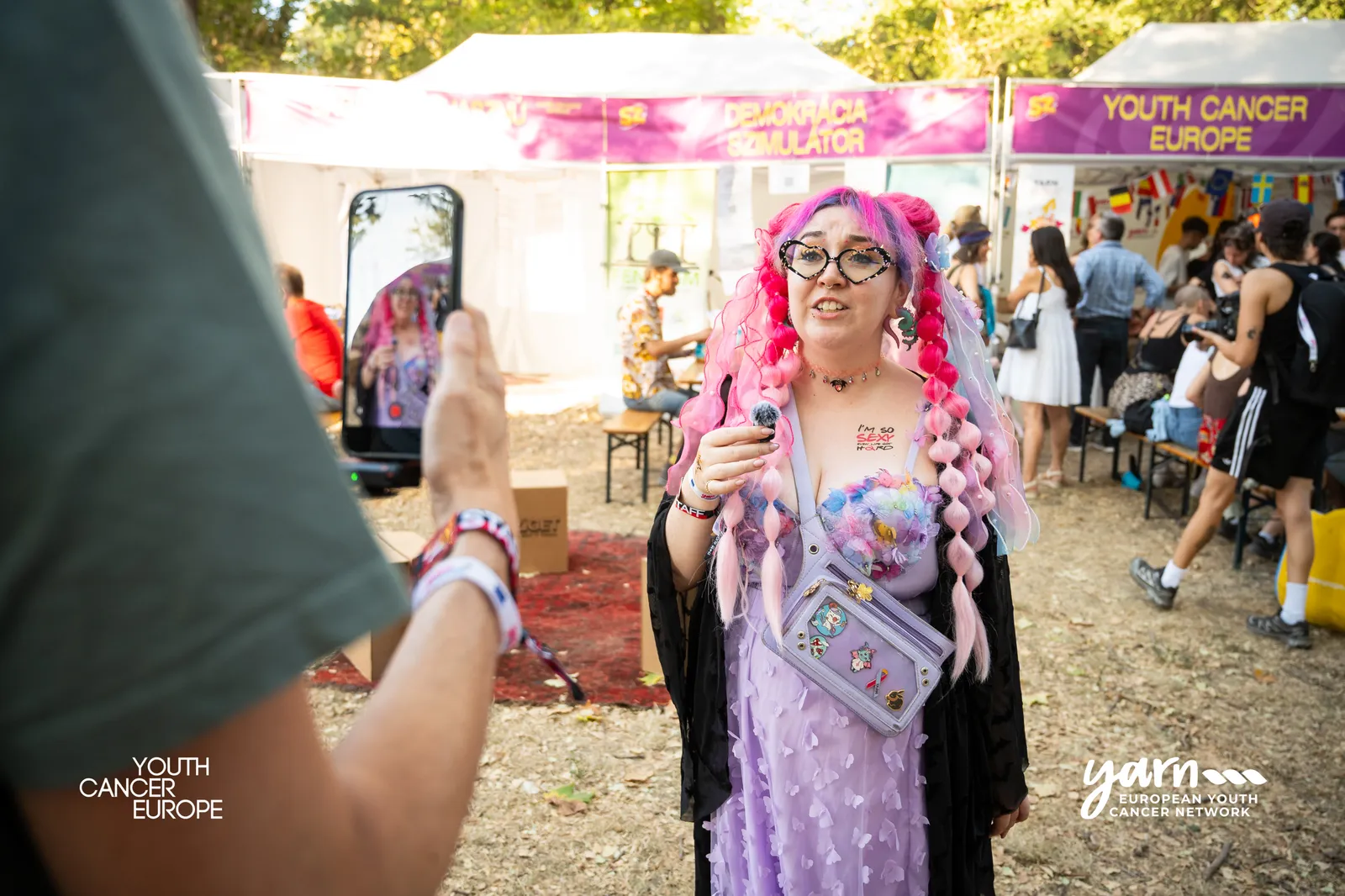
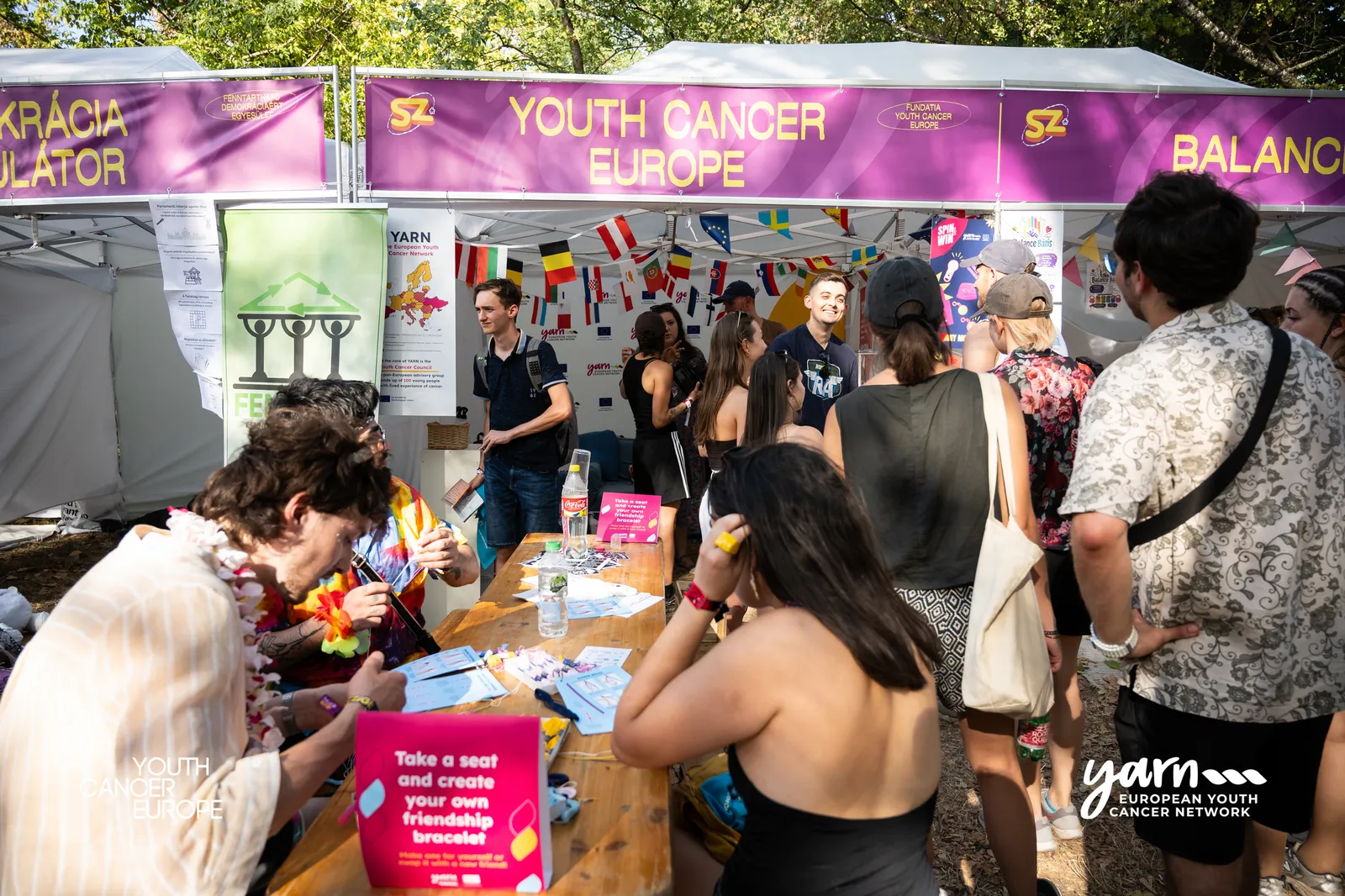
Throughout the week, participants welcomed visitors to the Youth Cancer Europe stand at Impact Island, Sziget Festival’s dedicated space for organisations creating social change.
Thousands of people stopped to talk about life with and beyond cancer, challenge assumptions and discover how young people are helping shape better care, research and policy across Europe.
Conversations with decision-makers
The event was delivered with the support of our Hungarian partner, Érintettek Egyesület, whose local expertise strengthened our work on the ground, from welcoming participants to engaging local media and decision-makers.
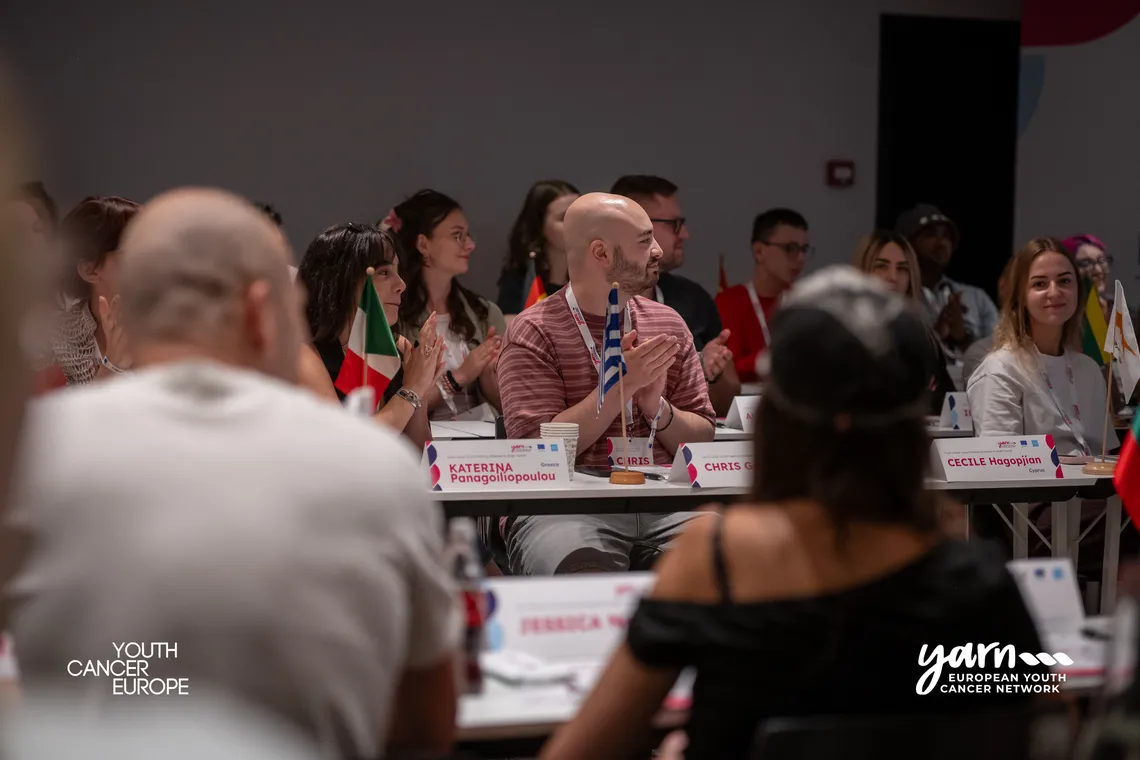
During the week, participants met László Darvai, Hungary’s Deputy State Secretary for Health, and Pótor József, Deputy State Secretary responsible for Civil Relations.
The discussions focused on the realities of living with and beyond cancer, long-term follow-up, access to care and the role of patient organisations in improving health policy across Europe.
Turning lived experience into European action
One discussion during the week highlighted a challenge familiar to many people travelling across Europe: prescriptions issued in one country cannot always be recognised or dispensed in another.
Rather than leaving the conversation in the meeting room, we are now exploring how this issue could become a future European policy initiative, helping ensure that people can access essential medicines wherever they are in the European Union